

Opposite problems, same cycle. Both trace back to the path between purchase, shelf, and work order.
In asset-intensive operations, supply chain management ties procurement, stock, consumption, and replenishment to the assets and work orders that use them. 4Site carries that cycle in the operating record, showing what work consumes, what needs replenishment, and what stopped moving. Recoup supports value recovery when surplus assets or equipment leave the cycle.
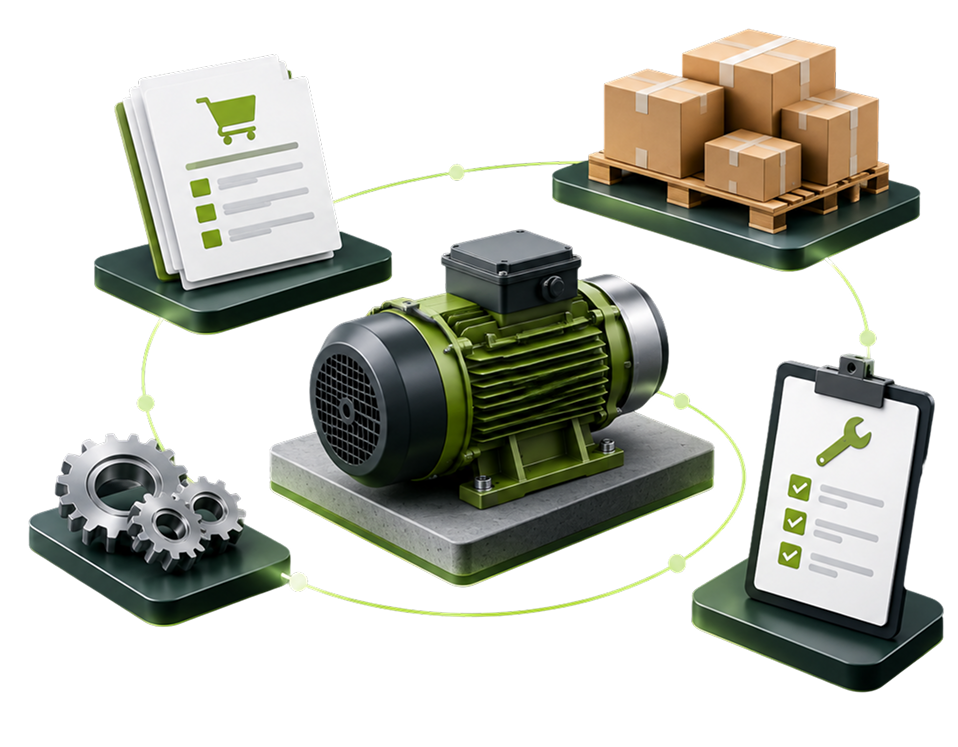
A clean purchase order does not show whether received stock will be consumed, replenished, or left sitting. A stock report does not show which work orders draw materials down. 4Site connects both, so the storeroom can see which work orders drew a part down and when it needs replacing.

Procurement, stock, consumption, and replenishment tied to assets and work orders.

Surplus assets and equipment recovered, redistributed, resold, or disposed with the record attached.
Finance sees spend after the part is bought. Operations needs the reason behind it: part, shelf, work order, and replenishment decision. 4Site supports that supply-chain record. Add Recoup when surplus assets or equipment leave the cycle, and Optima when a decision affects a fixed asset or capital record.

Procurement buys. Storerooms receive. Maintenance consumes. Replenishment should catch the next need before shelves run out. When stages run separately, work waits on missing parts while excess stock sits untouched.



Start with one asset, one line of work, or one part your team cannot miss.