

A work order that closes without its cost leaves the history incomplete.
4Site ties preventive maintenance schedules to the assets they cover. The planner builds the work in advance, and the technician sees it when the job comes due. Corrective work opens against the same asset, so planned and reactive history stay together. Each closed job carries parts, labor, and cost. The asset record shows what ran, what it consumed, and what it cost.
Accountability changes by record and by team. Start with the path closest to the work you have to defend.
Fixed-asset records, depreciation, and reporting finance can defend.
Audit preparation, supporting records, and compliance review across asset workflows.
Location, custody, status, and movement across the asset lifecycle.
Physical inventory confirmed in the field and reconciled to expected records.
Planners and supervisors who build the PM calendar and need every closed job to carry its cost before the next scheduling cycle.
Government fleet and facilities teams whose maintenance records and per-asset costs must hold up under public reporting.
Plants, utilities, and mills where scheduled and corrective work run side by side, and each job needs to close with cost attached.
The solution page for keeping MRO and spare parts tied to the work that consumes them, with slow-moving stock visible.
Where each part physically sits in the building, from receiving to shelf to issue.
When a part needs replenishing, the next step is a requisition. The purchasing capability in 4Site takes it from there.
The ledger is only one part of the audit trail. AssetMaxx supports the asset record around it: custody, physical verification, reconciliation status, audit history, and disposition history. Use the right AssetMaxx product as a dedicated operating record, or connect it to existing systems through a defined exchange, so asset information stays useful across finance, inventory, and property teams.
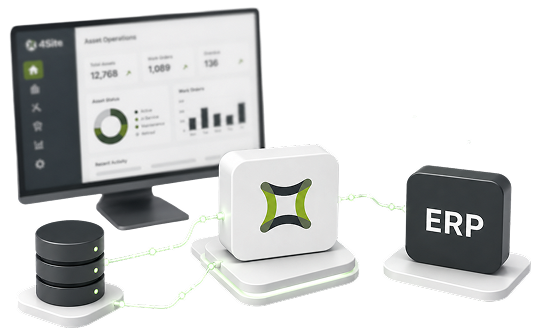
Every closed work order in 4Site carries its cost. Those costs roll to the asset and accumulate across jobs and project lines. The operations finance partner can see what each piece of equipment has cost to keep in service. Maintenance work orders carry labor, storeroom issues carry parts cost, and purchase receipts carry spend.
These questions land on different desks: the comptroller, inventory managers, the surplus office, and facilities. AssetMaxx connects each responsibility to the product built for it, starting with the record most likely to surface first: whether fixed assets can roll into one defensible statewide view.
Do the agencies each hold a fixed-asset record the comptroller can consolidate?

Statewide fixed-asset records, depreciation, and consolidation that support GASB requirements and the single audit.
How does the state confirm what each agency actually holds?

Physical inventory confirmed in the field and reconciled across agencies and locations.
Can the state account for federal surplus property allocated to eligible donees?

SASP administration: donee eligibility, allocation and approvals, the 3040 and utilization, and compliance reporting GSA requires.

Maintenance, work orders, inventory, parts, labor resources, and operational cost across state facilities.
Every asset should give you the same three answers: what it costs, what it is worth, whether it is still there. Bring us one where they do not line up, and get all three in one place.